Open Shelving vs. Upper Cabinets: Which Is Right for Your Kitchen?
Standing in your kitchen, coffee in hand, you've probably caught yourself staring at the wall above your countertop and wondering if those bulky cabinets are doing you any favors. Maybe a friend just renovated and went bold with floating shelves stacked with stoneware. Maybe you've been scrolling design feeds late at night, second-guessing every choice. The truth is, the debate between open shelving and upper cabinets is one of the most common conversations we have with homeowners during a kitchen remodel consultation.
Both options have real strengths, and the right pick depends less on what's trending and more on how you actually live. Let's break down what each one brings to your space so you can make a choice that feels right years from now, not just at the reveal.
The Case for Open Shelving
Open shelving has earned its spot in modern kitchen design for good reason. It opens up walls, lightens the room visually, and lets you show off the things you love using every day.
When you take down a wall of upper cabinets and replace it with two or three sturdy wood or metal shelves, the kitchen instantly feels bigger. Light bounces around more freely, and the eye travels across the room without hitting a heavy box at eye level. For smaller NYC kitchens and tight Nassau County galley layouts, that visual breathing room can be a game changer.
There's also a daily-use benefit people underestimate. Everything is right there. No reaching, no hunting through stacks, no forgetting what's behind the second row of glasses. If you cook often, your most-used kitchen storage items lie within arm's reach.
Open shelves do come with a tradeoff, though. They need editing. Dust settles. And if your style runs more "stash the mismatched mugs" than "curated ceramics," you may find yourself constantly tidying up. Greasy splatters from the stove can also reach shelves placed too close to the cooking zone, so placement matters.
The Case for Upper Cabinets
Upper cabinets have been the backbone of American kitchens for decades because they simply work. They hide clutter, protect dishes from grease and dust, and pack a serious amount of vertical storage into a small footprint.
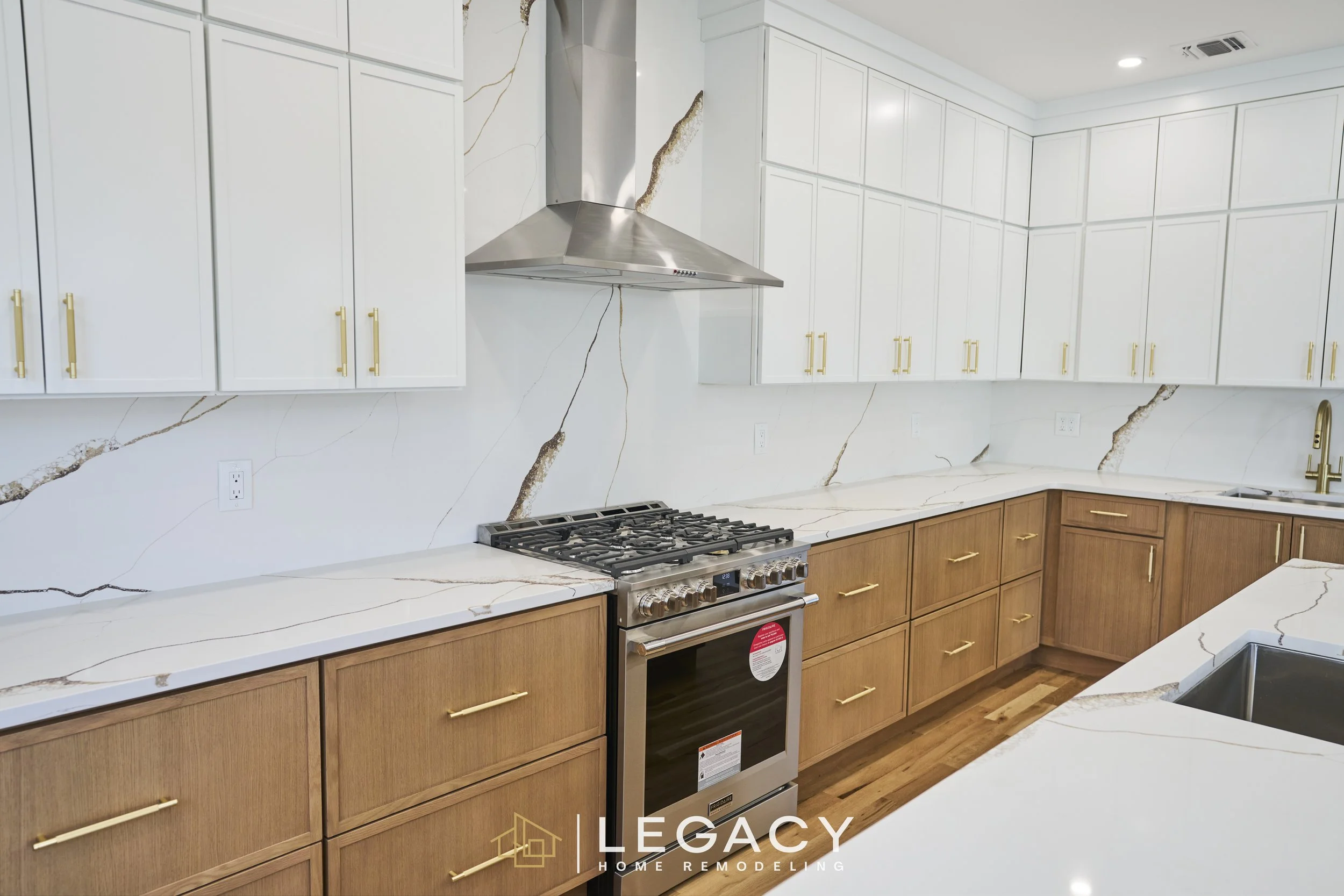
If you have a lot of cookware, small appliances, baking supplies, or dishes you only use during holidays, cabinets give you a place to put all of it without your kitchen looking busy. Glass-front cabinets offer a middle ground if you want a hint of display without committing to fully open shelves.
Modern cabinet design has also come a long way. Soft-close hinges, pull-out organizers, lift-up doors, integrated lighting, and full-height cabinetry that reaches the ceiling all turn yesterday's basic boxes into smart, hardworking storage. For families, busy households, and anyone who values a tidy look without the constant styling, cabinets remain hard to beat.
The downside is mostly visual. A full wall of upper cabinets can feel heavy, especially in smaller rooms or homes with lower ceilings. Dark finishes amplify that effect.
Storage Capacity: An Honest Comparison
Here's where homeowners often get surprised. A standard run of upper cabinets typically holds two to three times more than the same wall covered in shelves. If you're remodeling a kitchen that already feels cramped on storage, going fully open can leave you short. Many of our clients in Suffolk County land on a hybrid kitchen layout, keeping cabinets where bulk storage is needed and using open shelves as accents near the sink, range hood, or coffee station.
Style, Cost, and Long-Term Value
From a kitchen renovation cost standpoint, open shelves are usually less expensive per linear foot than custom cabinetry. That said, the savings aren't always as big as they look. Quality brackets, solid wood shelves, proper anchoring into studs, and styling pieces all add up. Cabinets cost more upfront but tend to add more measurable value when it's time to sell, especially in family-focused neighborhoods across Long Island.
Style-wise, open shelving leans toward modern farmhouse, Scandinavian, industrial, and coastal looks. Cabinets pair well with transitional, traditional, classic, and luxury aesthetics. Both options pair beautifully with quartz countertops, making it easy to create a cohesive kitchen design regardless of your style. Neither is more "current" than the other anymore. Both have settled into the design world as legitimate, lasting choices.
Maintenance and Daily Living
Be honest with yourself about how you live. If you love rotating seasonal dishware and enjoy the small ritual of arranging things, open shelves will reward you. If you'd rather close a door and not think about it, cabinets are your friend.
Households with kids, frequent entertainers, and anyone sensitive to dust or kitchen grease usually lean cabinet-heavy. People who cook simple meals, drink a lot of coffee, and like a minimalist look usually love shelves.
When a Hybrid Approach Wins
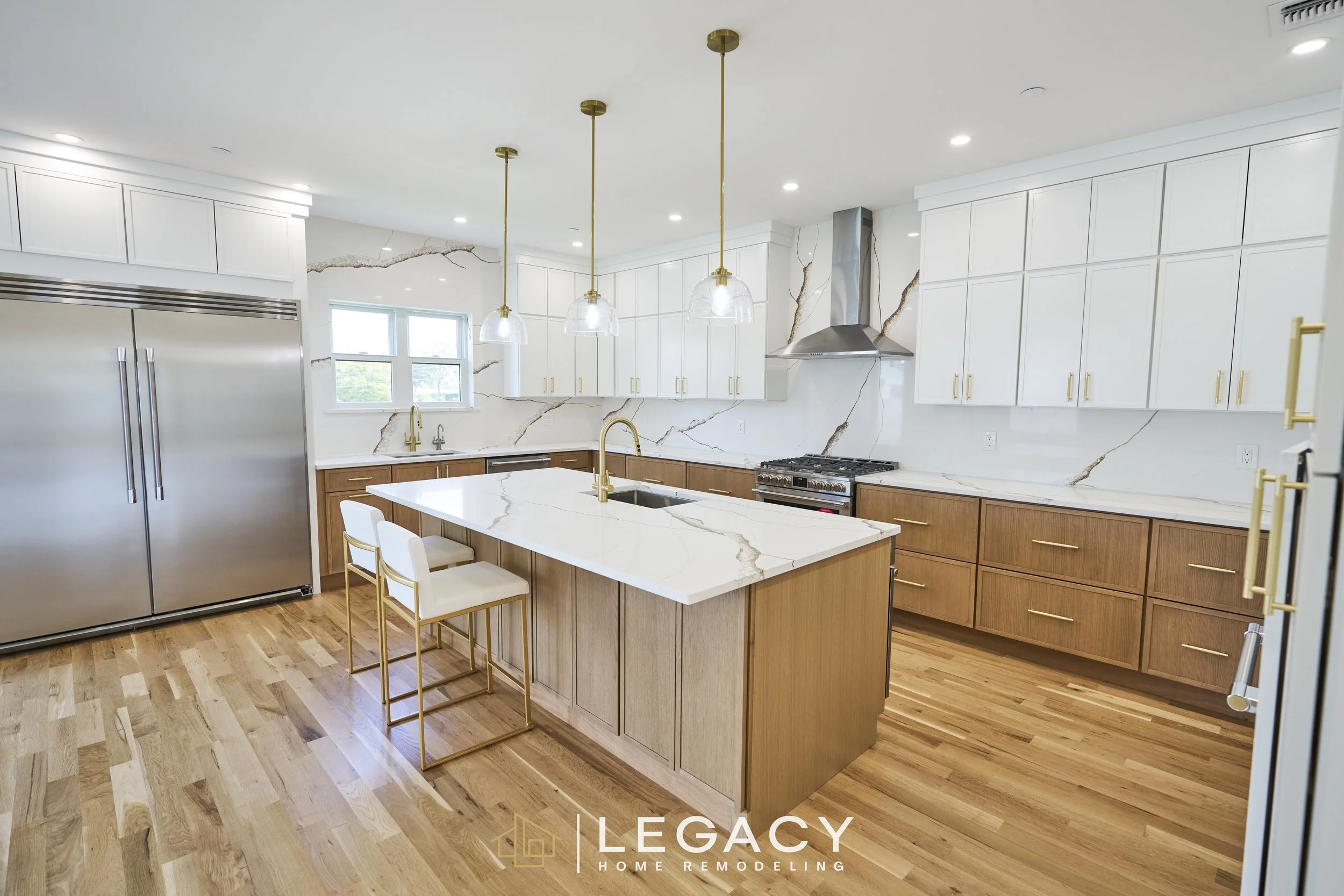
In most of our kitchen remodeling projects across Nassau and Suffolk Counties, a blend works best. A few examples we've used with great results include keeping tall pantry cabinets and base storage intact and then opening up one focal wall with two thick wood shelves above a tiled backsplash. Another favorite is wrapping a window with shelves while flanking the range and refrigerator with closed cabinets. This gives you the airy, custom feel of open shelving without sacrificing real storage.
A hybrid approach also lets you future-proof. Tastes change. A well-designed kitchen with both shelves and cabinets ages gracefully. Planning the kitchen remodel order carefully, from cabinetry and shelving to countertops and finishes, helps ensure everything fits together seamlessly.
Frequently Asked Questions
Are open shelves harder to keep clean than cabinets?
Yes, they show dust and grease faster, especially near the stove. A quick wipe-down once a week usually handles it, but if you cook heavy meals daily, plan placement carefully or lean on more cabinets.
Do open shelves hurt resale value?
Not if they're done well and balanced with enough closed storage. Buyers in Long Island markets generally still want functional cabinet space, so a fully open kitchen can narrow your buyer pool.
How much weight can open kitchen shelves hold?
Properly installed shelves with sturdy brackets anchored into studs can hold 40 to 50 pounds per linear foot, plenty for stacked dishes, glassware, and small appliances.
Can I mix open shelving with my existing cabinets during a remodel?
Absolutely. Replacing one section of uppers with shelves is one of the most cost-effective updates we do, and it gives a dated kitchen an instant modern lift.
Which option is better for a small kitchen?
Open shelving tends to make small kitchens feel larger, but if you're already short on storage, a hybrid with tall, ceiling-height cabinets on one wall and shelves on another usually performs best.
Ready to Design a Kitchen That Actually Fits Your Life?
Choosing between open shelving and upper cabinets isn't really about trends. It's about how you cook, entertain, store, and live. With three generations of craftsmanship behind every project, our team helps Nassau and Suffolk County homeowners design kitchens that look beautiful on day one and still feel right ten years in.
If you've been picturing a fresh, smarter kitchen, let's talk it through. Reach out for a free estimate and walk away with real ideas, honest guidance, and a plan built around your home. Call us today and let's start shaping the kitchen you'll love coming home to.