Transforming a dark, dusty storage area into a vibrant part of your home starts with one question: How do you make an unfinished basement livable? For many US homeowners, the basement represents a massive amount of untapped square footage. However, the transition from a concrete shell to a cozy family room or home office requires more than just a coat of paint. You must address specific challenges like moisture control, temperature regulation, and safety codes to ensure the space is both legal and comfortable.
In this guide, Legacy Home Remodeling, Inc. breaks down the essential steps to reclaim your lower level. Whether you are in the early planning stages or deciding between a DIY approach and professional help, these insights will help you create a basement living space that adds real value to your life and your property.
Turning an Unfinished Basement Into a Comfortable Living Area
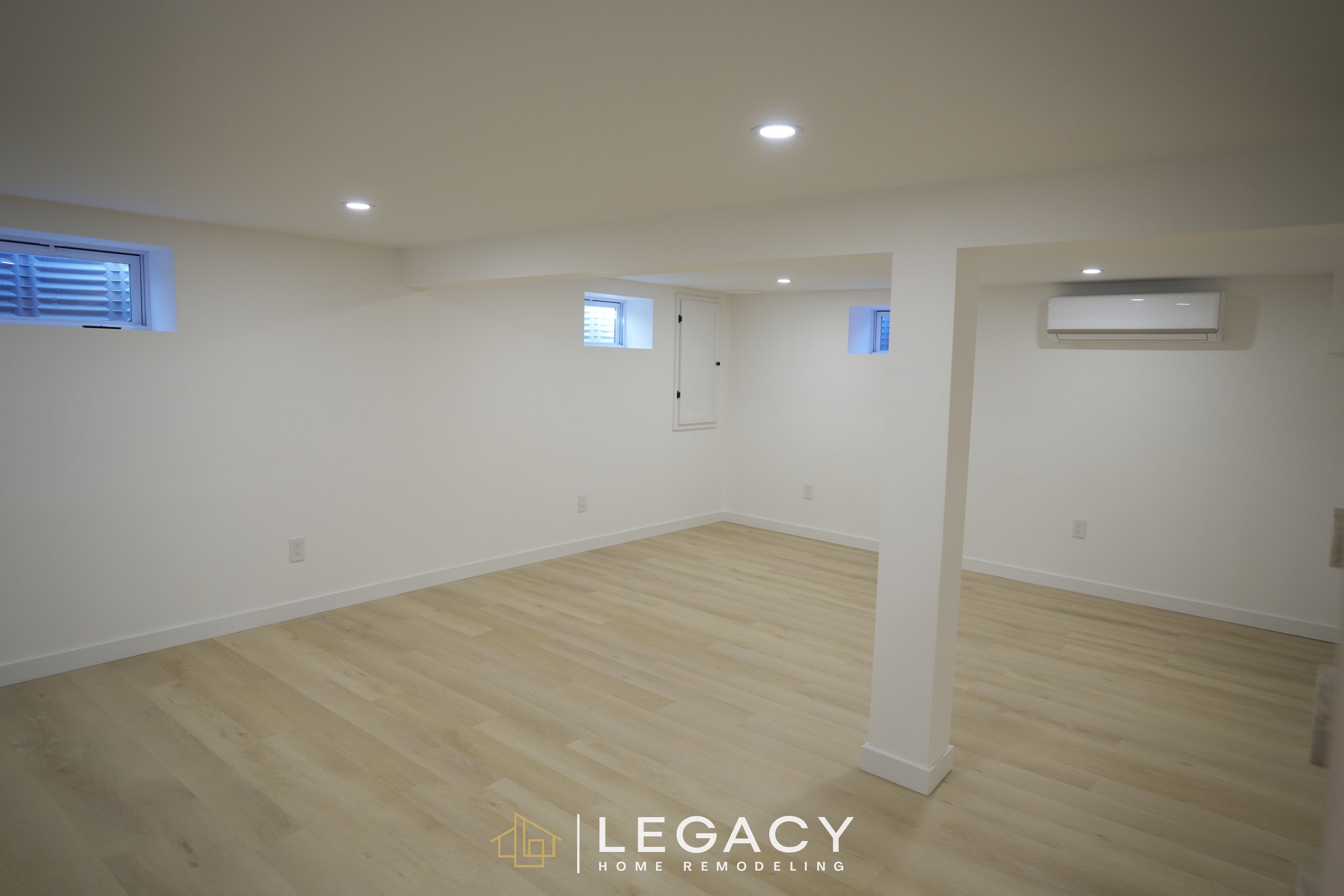
The first step in any successful basement remodeling project is defining your goals. Are you looking for a quiet home office, a high-tech media room, or a guest suite? Once you have a vision, you must consider the foundational layout. Zoning your basement into functional areas helps maximize the footprint while keeping utility access in mind.
Local building codes are the most critical part of this phase. You must ensure your plans include egress windows if the space will serve as a bedroom. Safety standards also dictate specific requirements for ceiling height and the placement of electrical wiring. For instance, outlets must follow GFCI (Ground Fault Circuit Interrupter) standards in areas prone to dampness. Planning your electrical wiring and plumbing early prevents expensive tear-outs later. Proper planning also helps you estimate how long does a basement remodel takes, so you can set realistic expectations for your family.
Must-Fix Basement Issues Before Making It Livable
You should never install drywall or flooring until you have a bone-dry environment. Basement moisture problems are the most common reason for failed remodels. Start with a professional assessment of your moisture control systems. This includes checking for cracks in the foundation, ensuring your sump pumps are operational, and verifying that exterior drainage moves water away from the house.
Applying a high-quality vapor barrier to walls and floors prevents groundwater from seeping into your new finishes. Furthermore, you should conduct radon testing to ensure the air quality is safe for long-term occupation. Incorporating insulation materials like rigid foam board helps with temperature control and prevents condensation from forming behind the walls. Using a dedicated dehumidification system will also keep the air fresh and protect your investment from mold and mildew.
Smart Flooring, Walls, and Ceiling Choices That Actually Work
Selecting the right materials is about balancing aesthetics with durability. Because basements are below grade, certain materials perform better than others.
Flooring: Luxury Vinyl Plank (LVP) and tile are excellent choices because they resist moisture. Always perform a subfloor installation or use a moisture-rated underlayment. Avoid solid hardwood, as the natural expansion and contraction over concrete slabs will lead to warping.
Walls: For basement wall finishing, framing the perimeter with metal or wood studs is standard. Use moisture-resistant drywall (often called green board or purple board) and fill the gaps with insulation materials like mineral wool for superior fire resistance and sound dampening.
Ceilings: A drop ceiling provides easy access to pipes and wires, which is highly practical. However, a finished drywall ceiling offers a more high-end, residential feel. Consider adding sound-control batts between the floor joists to reduce noise from the rooms above.
Lighting and Ventilation Tricks That Change the Whole Space
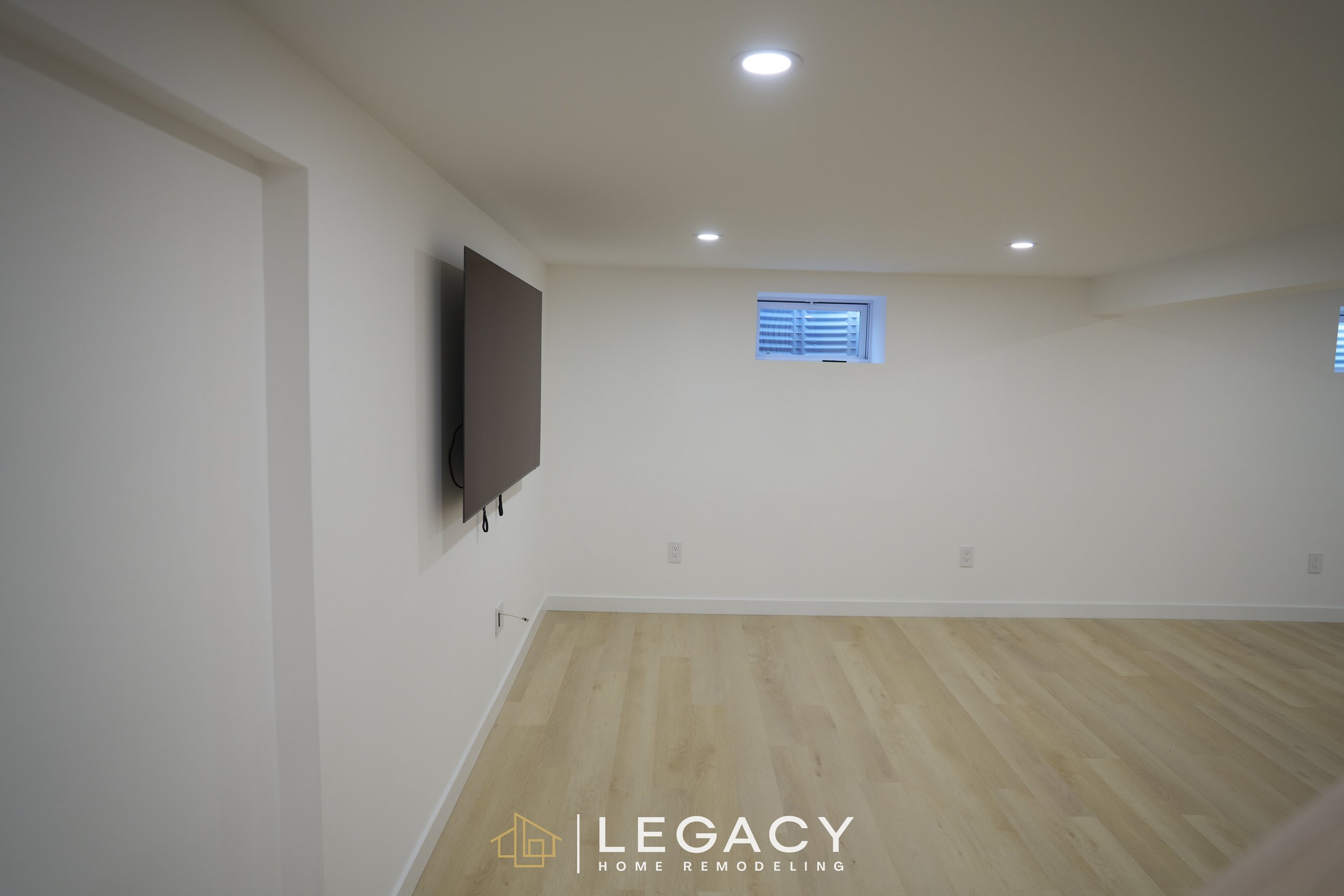
Basements are naturally prone to feeling like caves, but the right basement lighting solutions can fix this instantly. Use layered lighting to create depth. Start with recessed LED cans for ambient light, add sconces for task lighting, and use floor lamps for a warm glow. Choosing a "daylight" color temperature (around 4000K to 5000K) can mimic the feel of natural sun.
Ventilation is equally important for a basement comfortable enough for daily use. Ensure your HVAC system includes proper returns to keep air moving. If the space feels stuffy, consider an HRV (Heat Recovery Ventilator) or ERV (Energy Recovery Ventilator) to exchange stale indoor air with fresh outdoor air. Large egress windows and light wells are not just for safety; they provide the natural light necessary to make a basement feel like an upper-level room.
Simple Ways to Add Warmth, Style, and Function
Once the structural work is complete, focus on the finishing touches that make the space inviting. High-quality insulation materials in the walls do the heavy lifting for warmth, but you can enhance this with plush area rugs and electric fireplaces. These additions provide a focal point while taking the chill off the air.
Style should remain consistent with the rest of your home. Use a cohesive color palette and built-in shelving to maximize storage without cluttering the floor. Multifunctional furniture, such as a sofa bed or a desk that folds away, adds versatility. Don't forget to include modern tech features like USB outlets and smart lighting controls. As you finalize your design, keep in mind how long does a basement remodel takes, as some custom built-ins may extend the project timeline.
When to DIY and When to Call a Professional
A DIY approach is great for cosmetic updates. If you want to paint the walls, install modular storage, or lay down peel-and-stick LVP, you can save money by doing it yourself. These unfinished basement ideas work well for low-stakes utility spaces.
However, you should always call a professional for complex tasks. Legacy Home Remodeling, Inc. recommends hiring experts for structural modifications, subfloor installation, and complex moisture control systems. Any work involving electrical wiring, plumbing, or the installation of egress windows requires permits and inspections to ensure your home remains safe and compliant with local laws. Professional remodeling protects your home’s resale value and ensures that all warranties remain valid.
FAQs
What are the first steps to make an unfinished basement livable?
The first steps involve clearing the space, testing for moisture, and checking local building codes. You must ensure the foundation is waterproof and the air is safe before starting any construction or design work.
Can a basement be livable without finishing it completely?
Yes, you can create a "semi-finished" space by painting the ceiling joists, sealing the concrete floor, and using area rugs. This creates a functional workshop or gym, though it may not meet the code requirements for a bedroom.
What flooring works best in an unfinished basement?
Luxury Vinyl Plank (LVP) is the top choice for most homeowners. It is waterproof, durable, and comes in many styles. Ceramic tile is also a great option for its longevity and resistance to dampness.
How do you make a basement feel less cold and dark?
Use a combination of high-quality insulation, "daylight" LED bulbs, and warm textiles. Painting the walls in light, reflective colors also helps bounce light around the room to reduce that "basement" feel.
Is it expensive to make an unfinished basement livable?
The cost varies based on the size of the space and the finishes you choose. While structural repairs and moisture mitigation add to the initial cost, a finished basement provides one of the highest returns on investment for home value.
Conclusion
Making your basement livable is an investment that pays off in both daily enjoyment and long-term home equity. By addressing moisture, following local codes, and choosing smart materials, you can turn a dark storage area into your favorite room in the house.
If you are ready to start your project, contact Legacy Home Remodeling, Inc. today. Our team of experts is ready to help you navigate the complexities of permits, moisture control, and design. Let us show you exactly how you make an unfinished basement livable.